A Complete Guide to Healthy Hair
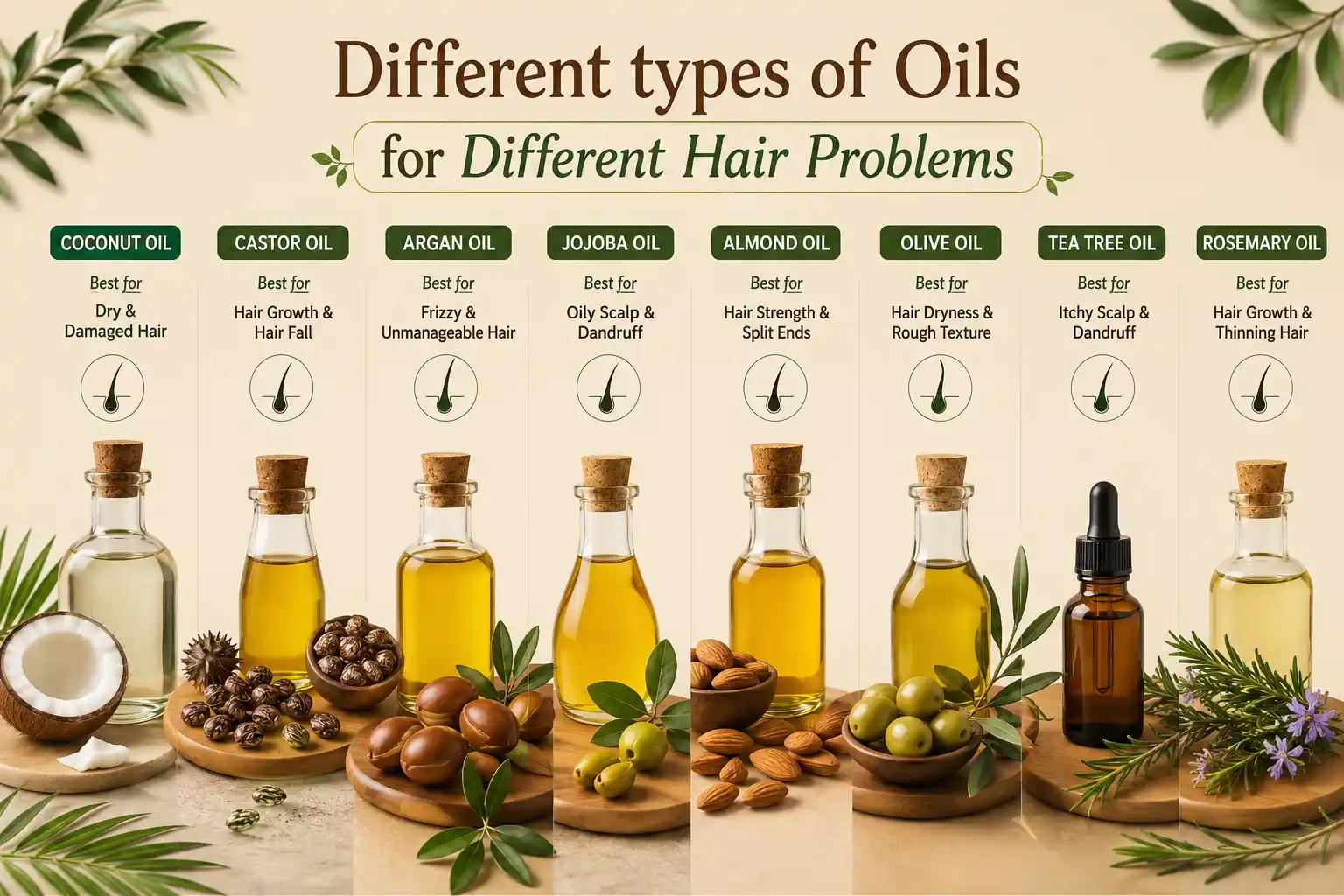
Different types of oils for different hair problems have their own suitable oils to apply due to the presence of different nutritional contents in the oils .Good hair is separated from bad hair based on the oil that is applied. In matters pertaining to
Hair treatment, especially, Different types of oil for hair becomes one of the most essential things to apply. Among these, the numerous problems include hair fall, dandruff, dryness of hair, poor hair growth and others.
Why Hair Oiling is Important
Hair oiling has always been a trusted method of hair care through history. Moreover, it nourishes the scalp, strengthens the roots, improves blood circulation, and protects hair from outside factors. In addition, Hair oiling will also minimize breakage and add shine to your hair. Now, let’s have a look at some effective Different types of oils for different hair problems.
One of the most used oils in hair care is coconut oil due to its high moisturizing properties. Coconut oil penetrates the hair shaft to prevent the loss of proteins.
Advantages:
- Moreover, moisturizes dry hair deeply
- Additionally, helps to avoid split ends
- Furthermore, brightens hair naturally
- Moreover, prevents hair from heat and pollutants
How to Use:
First, heat the oil slightly before massaging it into your scalp and hair. Then, keep it for at least two hours or overnight and wash.
2. Hair Growth with Castor Oil
In case you have hair fall or you just need some boost to grow hair faster, castor oil can be of great help. Moreover, it consists of ricinoleic acid and other essential fatty acids, promoting better circulation of blood and strengthening hair follicles.
Benefits:
- Firstly, hair growth promoter
- Additionally, hair thickener
- Furthermore, hair thinning prevention
- Moreover, supports healthy root system
Application Instructions:
For optimal usage, blend castor oil with coconut or almond oil and apply to your scalp two times a week. Additionally, regular use can help support a healthy scalp and hair-care routine.
3. Tea Tree Oil for Dandruff and Itchy Scalp
Tea tree oil is effective against fungi and bacteria. Furthermore, it is capable of killing bacteria that cause dandruff and soothing an inflamed scalp.
Benefits:
- Firstly, anti-dandruff action
- Additionally, soothes an itchy scalp
- Moreover, regulates the production of oils
- Furthermore, maintains a healthy scalp
How to Use:
Tea tree oil should be added to another oil such as coconut oil and then applied to the scalp. Finally, use it carefully and avoid applying undiluted tea tree oil directly to the scalp.
4. Argan Oil for Frizzy Hair
This is also referred to as “liquid gold” due to its antioxidant and Vitamin E content that helps deal with frizzy hair.
Benefits:
- Corrects frizz
- Makes hair feel softer
- Gives hair added luster
- Defends against heat
How to Use:
Place a few drops on wet or dry hair.
5. Almond Oil for Hair Breakage
The almond oil contains Vitamin E, D and magnesium, which helps in making the hair stronger and prevent hair breakage.
Benefits:
- Makes the hair stronger
- Hair fall due to breakage is prevented
- Elasticity of hair is improved
- Scalp nourishment
Usage:
It can be applied once or twice a week to the hair and scalp.
6. Rosemary Oil for Hair Thinning
The rosemary essential oil is very much used for its properties that help activate hair follicles and grow healthy hair.
Uses:
- Causes hair growth
- Increases scalp blood flow
- Makes hair roots strong
Using the Rosemary Oil:
Mix few drops with carrier oil and apply on scalp.
7. Olive Oil for Rough and Dull Hair
Olive oil antioxidants and healthy fats restore dull hair and add shine and softness.
Pros:
- Moisturizes dry hair
- Increases softness
- Brightens up the hair
- Lessens frizz
Application:
Apply olive oil at room temperature to hair and leave on for 30-60 minutes prior to washing your hair.
8. Jojoba Oil for Oily Scalp
The jojoba oil resembles the body’s natural oils, which regulate the oil secretion process as close as possible to the scalp sebum .
Advantages:
- Corrects the excess production of oils in the scalp
- Moisturizing without blocking the pores
- Stimulates the healthy growth of hair
- Lessens the inflammation of the scalp
Application:
Apply some of it onto the scalp and leave for several hours before washing.
Tips for Effective Hair Oiling
- – Select oils according to the hair problem.
- – Heat the oil slightly before application.
- – Massage slowly to improve blood circulation.
- – Allow the oil to stay in the hair for at least an hour.
- -Do not apply too much oil since it will make your hair dirty.
- – Rinse your hair with shampoo..
Conclusion
Different types of oils for different hair problems Selecting the right oil depending on the hair issue will definitely be beneficial in enhancing your hair appearance. The coconut oil is suitable for dry hair, while the castor oil is useful in hair growth. On the other hand, tea tree oil helps in combating dandruff and argan oil for frizziness. Once you understand the hair requirement and use the required oil, you can obtain healthy and shiny hair.
Take your hair care seriously now by selecting the right oil.Top of Form
if you want buy the hair oil click herehttps://shinenglow.shop/hair-oil/